

Recent discussions between Certass, OPSS and product information specialists Buccaneer Solutions highlight the growing importance of documentation, traceability and evidencing compliance across the fenestration sector.
Certass is encouraging installers, fabricators and suppliers to take a closer look at how they evidence compliance following recent discussions with the Office for Product Safety and Standards (OPSS) and product information specialists Buccaneer Solutions.
The conversations explored common themes emerging across product compliance enforcement, including documentation, conformity marking, traceability and the ability of businesses to demonstrate compliance when challenged.

While the focus of OPSS activity spans multiple construction product sectors, the discussions highlighted lessons that are increasingly relevant to the fenestration industry as regulatory expectations continue to evolve.
One of the strongest messages to emerge was that compliance is no longer simply about having the right product. Businesses must also be able to demonstrate that products meet the relevant requirements through clear documentation, accurate records and robust evidence.
In many cases investigated by OPSS, concerns did not necessarily arise because products were proven to be unsafe or non-compliant. Instead, problems emerged because businesses were unable to provide the documentation, labelling and conformity marking required by law, undermining confidence that products met the relevant standards.
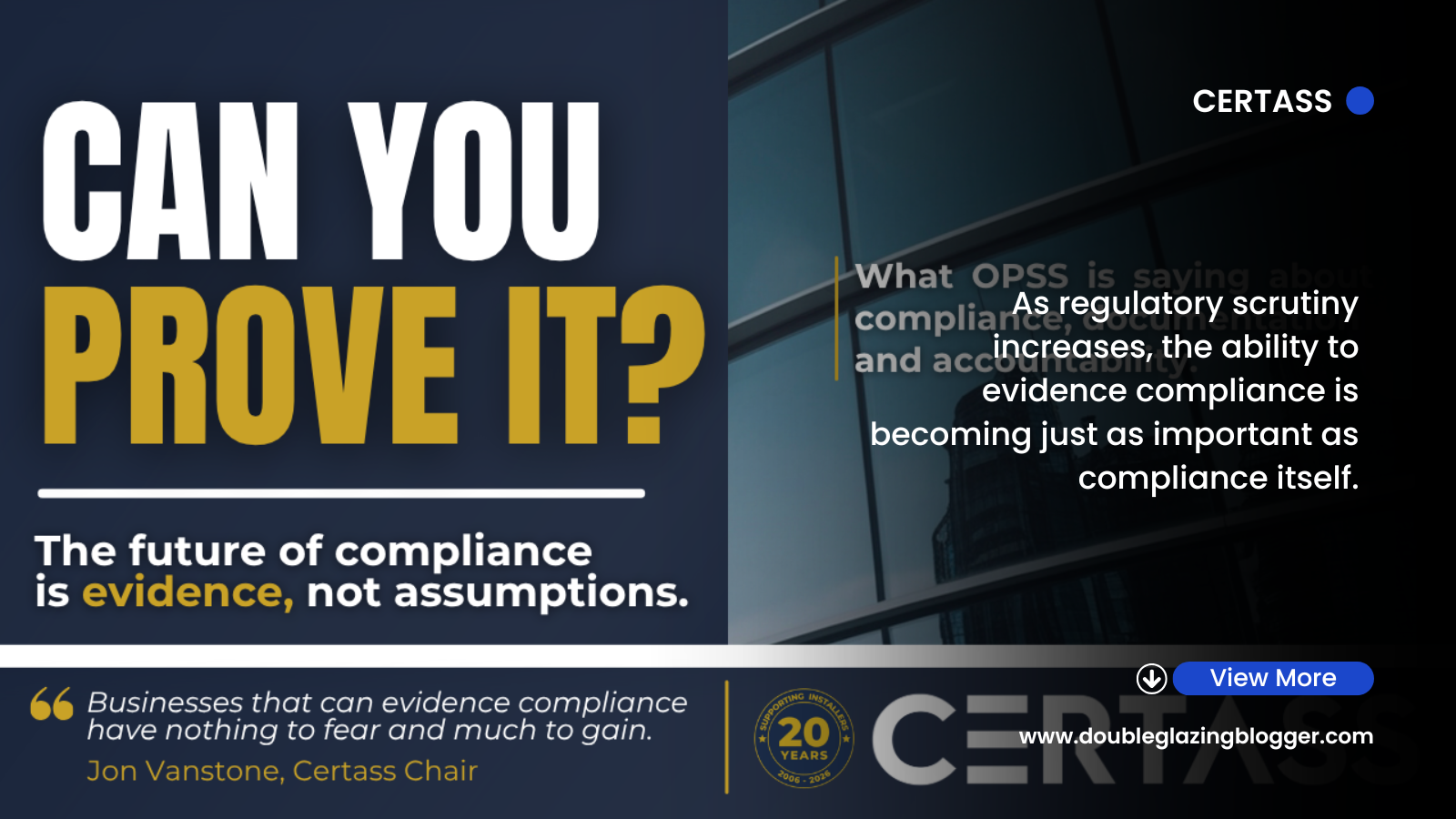
As regulatory scrutiny increases, the ability to evidence compliance is becoming just as important as compliance itself.
For installers, this has implications beyond product selection. Documentation is increasingly becoming a critical part of the installation process, from demonstrating competence and recording customer decisions through to maintaining evidence of product performance and specification.
The discussions also reinforced the growing importance of supply chain due diligence.
Installers are often the final link in the chain, but they remain responsible for understanding the products they are fitting and ensuring appropriate documentation is available. This includes checking that products are correctly labelled, supported by relevant declarations and backed by the information needed to demonstrate compliance if questioned by regulators, clients or building control bodies.
The timing is particularly significant as the industry prepares for further regulatory change.
The Building Safety Act continues to drive greater accountability across construction, while proposals for a Single Construction Regulator are expected to create a more joined-up approach to oversight of products, buildings and professional competence.
At the same time, the Future Homes Standard and evolving energy efficiency requirements are expected to place greater emphasis on product performance, specification and documented evidence of compliance.
For many businesses, this represents a shift away from assumptions and towards demonstrable evidence.
Jon Vanstone, Chair of Certass and Chair of the Industry Competence Committee, said:
“The key message from our discussions was straightforward. Compliance is no longer something businesses can simply assume. Increasingly, organisations need to be able to demonstrate it.
“Across construction, we are seeing a move towards greater accountability, stronger documentation and clearer evidence trails. Whether it is product information, conformity marking, installation records or customer decisions, the ability to evidence compliance is becoming increasingly important.
“Businesses that can evidence compliance have nothing to fear and much to gain.”
Certass believes the message is particularly important for SME installers operating in a challenging market.
As homeowners become increasingly price-conscious, installers are often placed under pressure to reduce costs, alter specifications or justify recommendations. Maintaining clear records of advice given, products specified and decisions made helps protect both the customer and the installer while demonstrating professionalism throughout the customer journey.
The organisation says the wider direction of travel is becoming clear: competence, documentation, traceability and accountability are no longer separate issues. Together, they form the foundation of modern compliance.
Certass will continue engaging with regulators, government bodies and industry stakeholders to ensure members remain informed about emerging requirements and have access to practical guidance that helps them navigate an increasingly evidence-led compliance landscape.
Sponsored news via Certass

Subscribe for FREE below to receive the weekly DGBulletin newsletter and monthly digital magazine!