
Wow. What a week the tech world had last week. Dramatic feels like the appropriate word for it.
Returning for the next in his guest column series on DGB, Aperture Works founder Paul Edwards breaks down the crazy week the tech world had last week and what it means for the fenestration sector.
When the company behind WordPress starts building for a future without it, it’s time to question the technology we rely on.
What a week in Tech!
Jensen Huang resigned as CEO of Nvidia. Microsoft 365 went down worldwide for the best part of a day. And Automattic, the company behind WordPress.com, launched a platform for websites that don’t need WordPress at all.
Are we too dependent on a handful of tech companies and the people running them?
Has WordPress seen the writing on the wall?
On 9 November, Automattic launched Spacefast. It hosts websites and apps built with AI tools like ChatGPT, Claude, and Cursor. Its team says some sites won’t need a content management system at all.
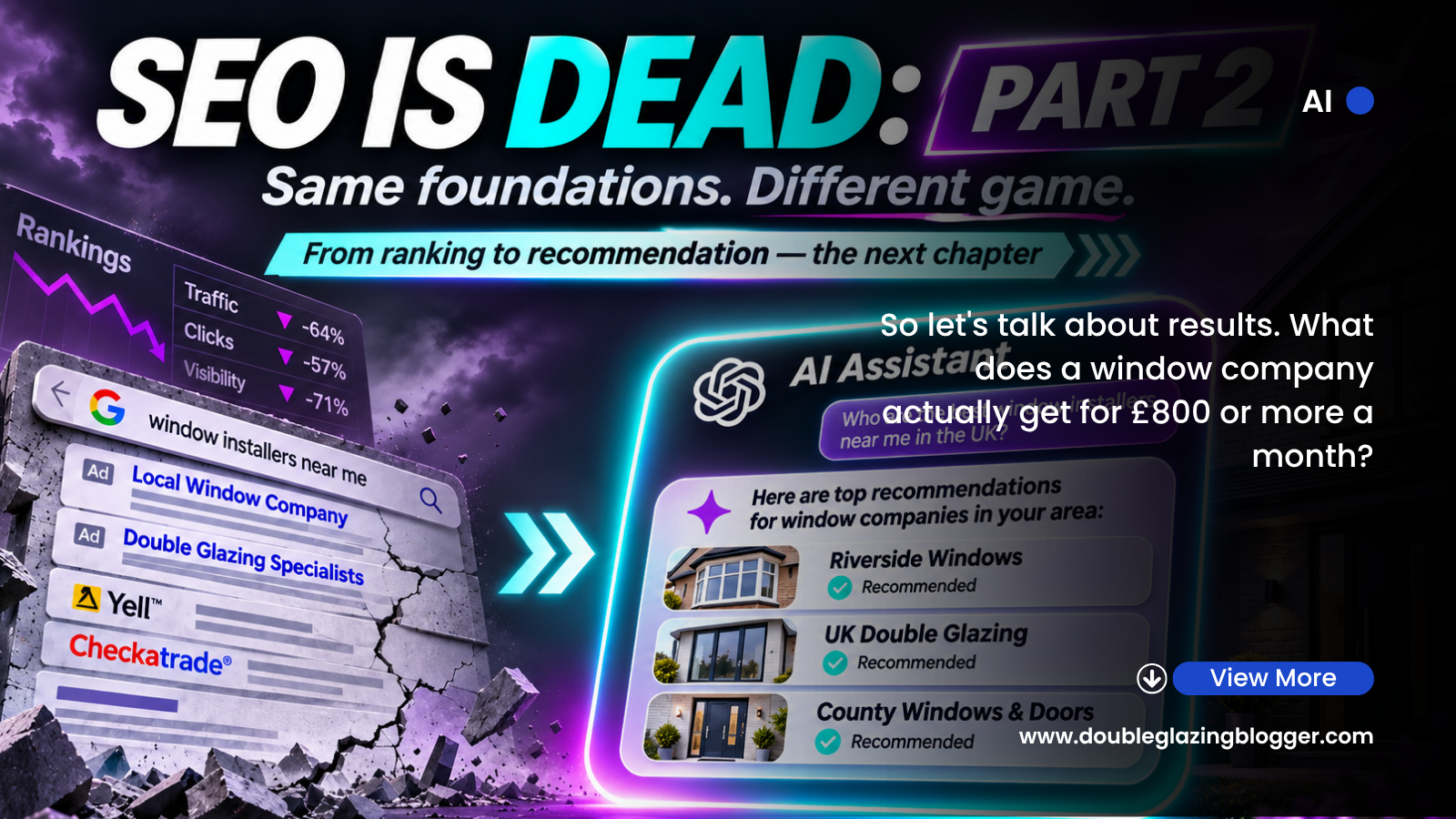
But ChatGPT already builds and hosts websites itself, around eight million of them. So is this a bold move, or a company trying to stay relevant?
For years, websites meant themes, plugins, updates, and another subscription for every new feature. Now you can describe what you want to AI and have it built for your business.
We’re seeing it at Aperture Works. Using AI on our own websites, things that took weeks now take days. We’re not abandoning WordPress, but it’s no longer the default.
Technology still revolves around people
Huang co-founded Nvidia in 1993 and ran it for 33 years. He resigned on 12 November during a board investigation.
Within two days, over 80,000 people had signed an open letter calling for him to be brought back. Over 4,000 of them say they’re current Nvidia staff. Elon Musk signed it too. Hundreds of employees have reportedly threatened to quit.
We’ve seen this before. In 2023, OpenAI’s board sacked Sam Altman. Staff threatened to walk out, and he was back within a week. Automattic’s board forced out Matt Mullenweg this year. He was back within days.
Even in the age of AI, people still run the show.
What happens when big tech stops working?
Thursday’s outage hit Outlook, Teams and OneDrive, with over 100,000 reports on Downdetector in the first hour. Microsoft 365 has more than 450 million paid business seats.
Think about how window companies rely on Outlook for enquiries, Excel for pricing, and OneDrive for customer documents.
Then there’s the less obvious problem. You log in to your CRM or an AI platform, and it sends a code to an Outlook inbox you can’t open. The software works. Your email doesn’t. You’re locked out of both.
Our email accounts have become the keys to our entire digital lives.
Our software already logs you in with an emailed code, like the big tech companies. Now we’re adding a backup: username and password, with compulsory two-factor authentication that doesn’t rely on your inbox.
Losing access to your email shouldn’t mean losing access to your business.
So, is WordPress dead?
Not yet. It still powers millions of websites, including some of ours. But the technology we’ve relied on for years is changing, and quickly.
We’re putting together a practical one-day workshop showing business owners how to use AI to optimise their websites, understand performance and build useful tools without another subscription.
The future doesn’t belong to whoever uses the most AI. It belongs to those who understand their business and know when to change direction.
The biggest risk isn’t AI replacing today’s technology. It’s paying for yesterday’s solutions when better ones are already here.

Subscribe for FREE below to receive the weekly DGBulletin newsletter and monthly digital magazine!