

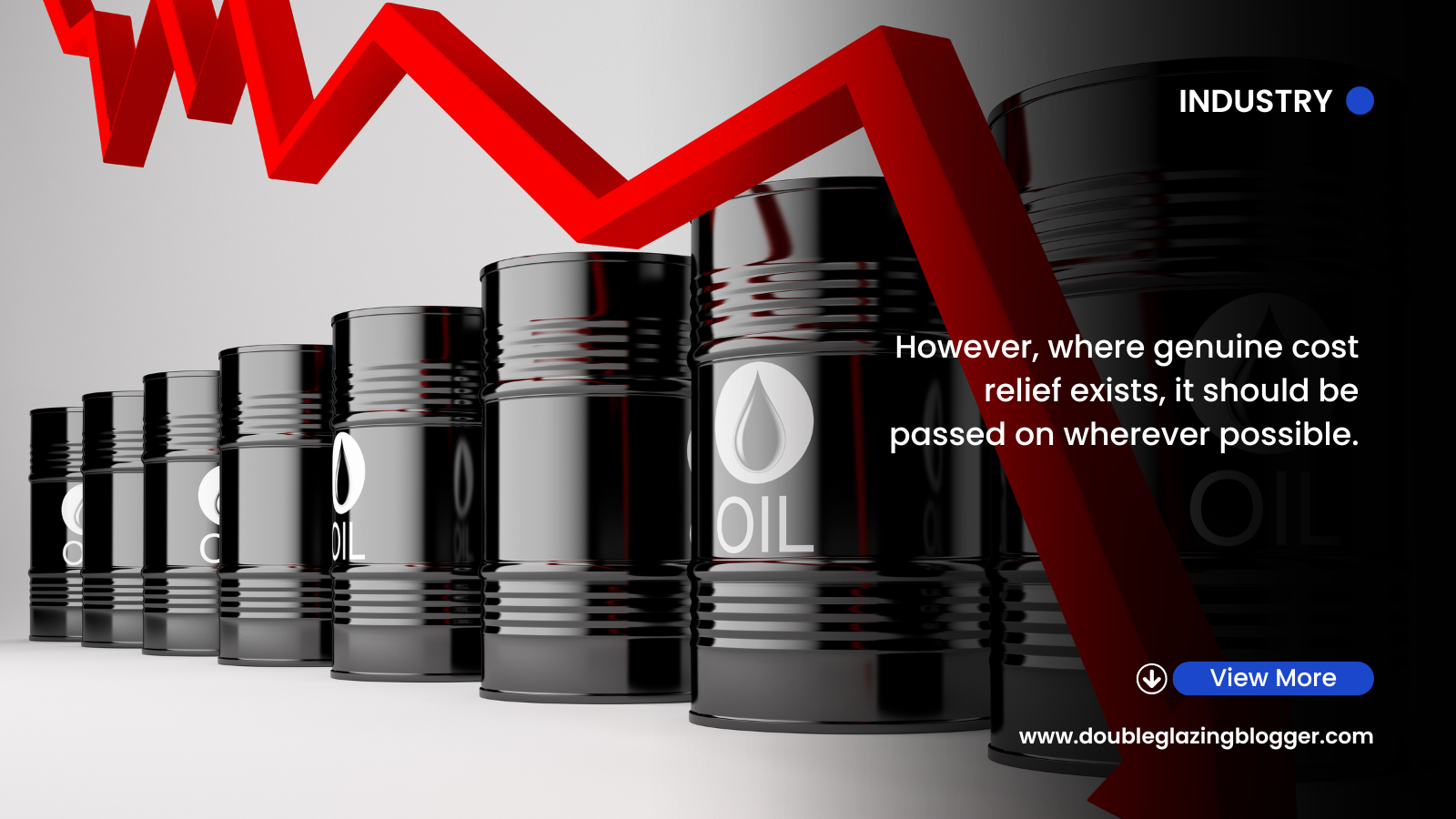
Oil prices are approaching levels last seen before the Iran war started. This was the main driver of price increases across our sector over the last few months. But it looks like some semblance of stability is returning to the Middle East right about now. Of course, nothing can ever be certain in that part of the world, and even at the time of writing, planned peace talks have been postponed in Switzerland.
Still, with oil prices down around $40 from their highs at the peak of the conflict, there is welcome breathing room on the horizon when it comes to costs. The prospect of lower prices must then bring forward a conversation about our own sector’s prices.
True to word
It’s not just oil prices; PVC resin prices are now back at pre-war levels. These two commodities have been the main drivers of the price increases in our sector over the last few months.
As suppliers began to inform their customers of price increases, many promised that they would stay responsive to market movements. Many of these increases were described as “temporary surcharges”.
What will be crucial now is that suppliers at the very top of the supply chain, in our case, systems companies and the suppliers who supply them, begin to roll back these surcharges once lower commodity prices have begun to trickle through. Now most supply contracts are 3-6 months ahead, so in theory we should be starting to see lower prices begin to flow to fabricators and then installers towards the end of the summer and early autumn.
I would urge all companies at the head of our supply chain to be true to your word. Ensure the temporary surcharges are just that, temporary. During COVID, many of the price increases were described as the same. Except they stuck, even when things became more settled, and prices withdrew somewhat. I don’t believe that was ever reflected in retail pricing. This time has to be different. Our industry is already in a very tough place, and if there is some help that can be administered on the pricing side of things, then this should be done.
If these “temporary” price increases become fixed, even against a backdrop of falling resin prices and oil prices, then it would cause great damage to the integrity and trust in parts of the supply chain.
A chance to rebuild confidence
The next few months will provide a real test of how responsive our supply chain is to changing market conditions. Everyone understands that when costs rise sharply, prices have to follow. Fabricators, installers, and ultimately homeowners have accepted that reality over the last few years.
But the principle has to work both ways. If commodity costs are falling and the pressures that drove emergency surcharges are easing, then customers will rightly expect to see some of those reductions reflected further down the chain.
This is about more than pricing. It is about confidence. Our sector functions best when there is trust between systems companies, fabricators, installers, and consumers. Businesses can plan more effectively when they believe pricing decisions are being driven by genuine market conditions rather than simply becoming the new normal.
No one is suggesting prices will return to where they were before the inflationary shocks of recent years. Energy, labour, and regulatory costs remain significant challenges. However, where genuine cost relief exists, it should be passed on wherever possible.
The companies that demonstrate transparency and consistency now will strengthen relationships across the supply chain. In a market that remains highly competitive and where demand is still under pressure, that trust could prove just as valuable as any short-term margin gain.

Subscribe for FREE below to receive the weekly DGBulletin newsletter and monthly digital magazine!





Prices never come down. Companies chase profit and when a certain level of price is reached and profit maintained, the price never reduces.
That’s how the capitalistic world works I’m afraid. If you were providing a service and you manage to gain a certain level of fee, then that’s the new price point for that service.
I still don’t believe this business with inflation is over, it’s the beginning of a new normal of inflation around the world.
PVC prices are nothing like where they were pre-war, I’m in that business.