
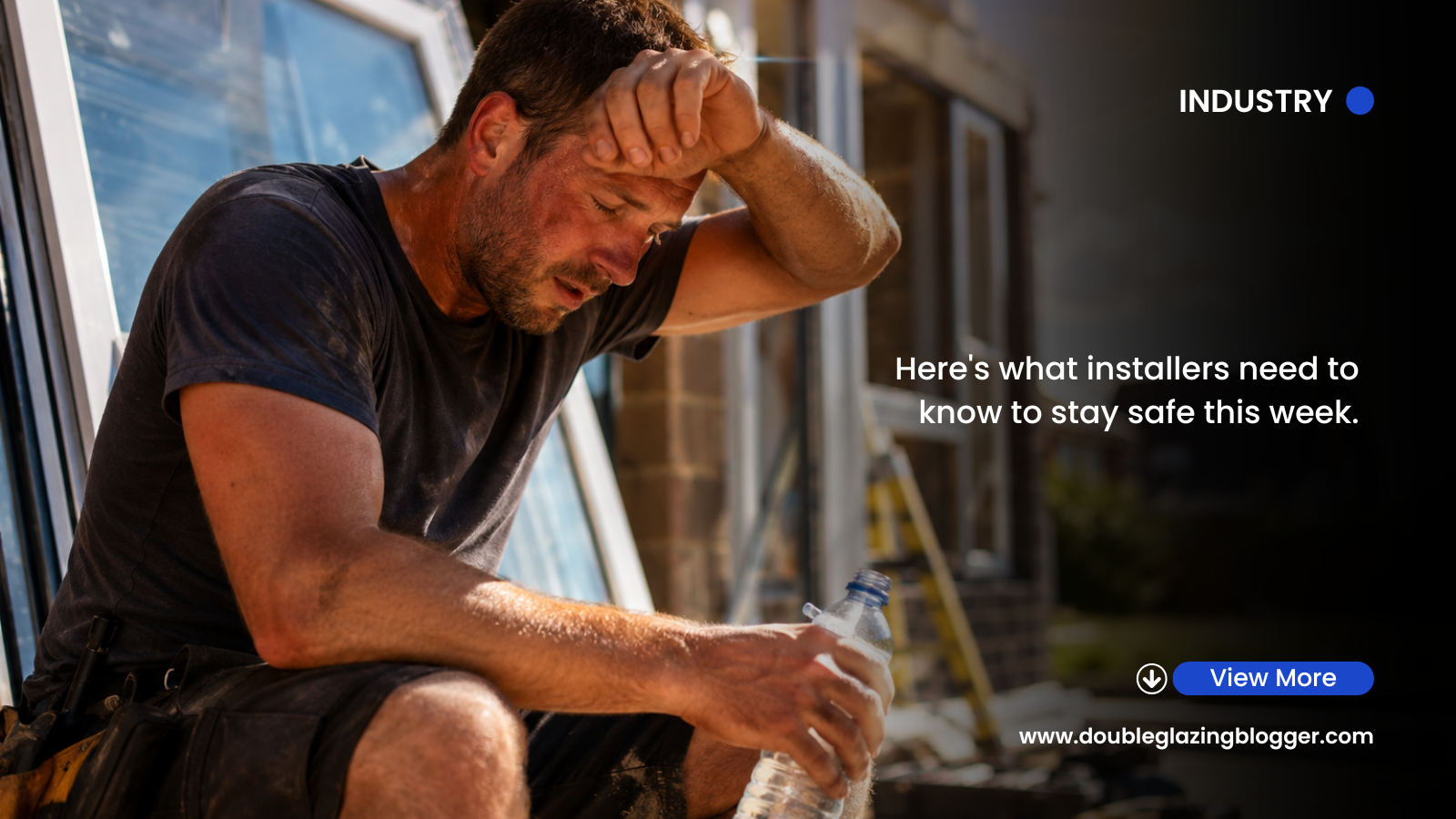
The UK is preparing for what could be one of the hottest June periods on record, with some forecasts suggesting temperatures could approach 40°C in parts of the country. For fenestration installers, it presents more than just an uncomfortable day on site. It creates genuine health and safety risks that can affect concentration, decision-making, productivity and, in extreme cases, become life-threatening.
Whether you’re fitting windows on a south-facing elevation, carrying sealed units, working from access equipment or spending hours in direct sunlight, the combination of heat, physical exertion and UV exposure can quickly take its toll.
Here’s what installers need to know to stay safe this week.
Why Fenestration Installers Are Particularly Vulnerable
Window and door installation is physically demanding work. Installers often spend long periods:
- Working outdoors in direct sunlight
- Lifting heavy glazed units
- Wearing PPE and workwear that restricts cooling
- Working from ladders, scaffolding or access equipment
- Travelling between sites in vehicles that can become extremely hot
The HSE warns that heat stress occurs when the body’s ability to regulate its internal temperature starts to fail. High temperatures, humidity, physical exertion and restrictive clothing can all contribute.
The danger is not simply discomfort. Heat can reduce concentration, slow reaction times and increase the likelihood of mistakes and accidents.
Dehydration: The Hidden Productivity Killer
By the time you feel thirsty, you’re already becoming dehydrated.
When working in hot conditions, your body loses water rapidly through sweating. If that fluid isn’t replaced, performance drops quickly.
Common signs of dehydration include:
- Headaches
- Dry mouth
- Fatigue
- Dizziness
- Reduced concentration
- Muscle cramps
- Dark-coloured urine
The HSE specifically advises employers to provide cool drinking water and encourage workers to drink frequently in small amounts throughout the day.
Practical Advice
- Start hydrating before arriving on site.
- Keep a large water bottle in the van.
- Drink regularly rather than waiting until you’re thirsty.
- Increase water intake when lifting heavy frames or glass.
- Avoid relying solely on energy drinks, which can contribute to dehydration.
A useful rule of thumb: if you’re not stopping to refill your water bottle during a 40°C day, you’re probably not drinking enough.
Know the Difference Between Heat Exhaustion and Heat Stroke
Many tradespeople use the terms interchangeably, but they’re very different.
Heat Exhaustion
Symptoms include:
- Excessive sweating
- Dizziness
- Weakness
- Nausea
- Headaches
- Muscle cramps
- Rapid heartbeat
Heat exhaustion is serious but usually reversible if treated quickly.
Heat Stroke
Heat stroke is a medical emergency.
Symptoms include:
- Confusion
- Loss of coordination
- Fainting
- Seizures
- Very high body temperature
- Hot skin that may stop sweating
If someone is showing signs of heat stroke:
- Move them to a cool area immediately.
- Remove excess clothing.
- Cool them with water, wet towels or fans.
- Call emergency services.
Heat stroke can be fatal if not treated quickly.
Sunscreen: Most People Don’t Use It Correctly
Many installers apply sunscreen once in the morning and assume they’re protected for the day.
Unfortunately, that’s not how sunscreen works.
HSE guidance recommends using a sunscreen of at least SPF50 on exposed skin.
To get the stated protection:
- Apply before starting work.
- Cover all exposed areas, including ears and neck.
- Reapply every two hours.
- Reapply more frequently if sweating heavily.
- Don’t forget hands and forearms.
Remember that UV exposure is cumulative. Even if you don’t burn, years of working outdoors significantly increase the risk of skin cancer. Outdoor workers can receive substantially more UV exposure than indoor workers over time.
Covering Up Can Actually Keep You Cooler
It sounds counterintuitive, but exposing more skin isn’t always the best solution.
The HSE recommends:
- Lightweight long-sleeved clothing
- Brimmed hats where practical
- Neck protection
- UV-blocking sunglasses
- Seeking shade whenever possible
Modern moisture-wicking workwear often keeps workers cooler than bare skin exposed directly to intense sunlight.
Rethink Your Working Day
During extreme heat, the smartest installers will adapt their schedules.
Consider:
- Starting earlier in the morning
- Completing heavy lifting before midday
- Taking additional breaks
- Using shaded areas for lunch
- Rotating physically demanding tasks among team members
- Avoiding prolonged work in direct afternoon sun
HSE guidance recommends limiting exposure, adjusting work patterns and increasing rest breaks during hot conditions.
If a frame installation can wait until 7am rather than 2pm, it probably should.
Don’t Forget the Van
A van parked in direct sunlight can become dangerously hot.
Before setting off:
- Ventilate the cab.
- Carry additional drinking water.
- Store sunscreen somewhere accessible.
- Use reflective windscreen covers where possible.
- Check that adhesives, sealants and other products have not exceeded their recommended storage temperatures.
Many installers focus on the jobsite but overlook the heat exposure that occurs between jobs.
Look Out for Each Other
One of the biggest risks during heatwaves is that workers often fail to recognise symptoms in themselves.
It’s usually easier to spot heat stress in a colleague.
Watch for:
- Unusual fatigue
- Confusion
- Irritability
- Excessive sweating
- Loss of concentration
- Poor decision-making
If someone isn’t acting normally, don’t ignore it.
The culture of “just getting on with it” has no place when temperatures approach 40°C.
Final Thoughts
There is currently no legal maximum working temperature in the UK, but employers and site managers still have a duty to manage heat-related risks and protect workers.
For fenestration installers, the risks this week are real. Heavy lifting, direct sun exposure, working at height, and long hours outdoors create a perfect storm for dehydration, heat exhaustion and UV-related health issues.
A few simple measures—drinking water regularly, using SPF50 sunscreen correctly, taking more frequent breaks and recognising the warning signs of heat stress—could make the difference between a productive week and a trip to A&E.
The glass can wait. Your health can’t.

Subscribe for FREE below to receive the weekly DGBulletin newsletter and monthly digital magazine!