
Eurocell increased revenue and adjusted operating profit in the first half of 2026, despite difficult conditions across UK housing and home improvement. However, the results show an uneven performance: a stronger contribution from Alunet and improving branch sales offset weaker trading in Profiles, while restructuring charges pushed the group into a statutory pre-tax loss.
For the fenestration sector, the figures illustrate how acquisitions, distribution initiatives and cost control can support growth when underlying demand remains subdued. They also show why rising group sales should not automatically be interpreted as evidence of a wider market recovery. Eurocell H1 2026 report
| Measure | H1 2026 | H1 2025 | Change |
|---|---|---|---|
| Revenue | £205.2m | £193.2m | +6% |
| Adjusted operating profit | £11.1m | £10.1m | +10% |
| Adjusted profit before tax | £8.2m | £7.8m | +5% |
| Statutory operating profit | £1.7m | £6.1m | −72% |
| Statutory pre-tax result | £1.4m loss | £3.8m profit | £5.2m deterioration |
| Net cash generated from operating activities | £17.9m | £18.4m | −3% |
| Net debt excluding IFRS 16 lease liabilities | £28.1m | £29.0m | £0.9m lower |
Source: Eurocell’s half-year report, page 1. Percentage changes use the company’s rounded figures; the £5.2m movement is calculated from the reported pre-tax results. Adjusted measures exclude items classified by Eurocell as non-underlying.
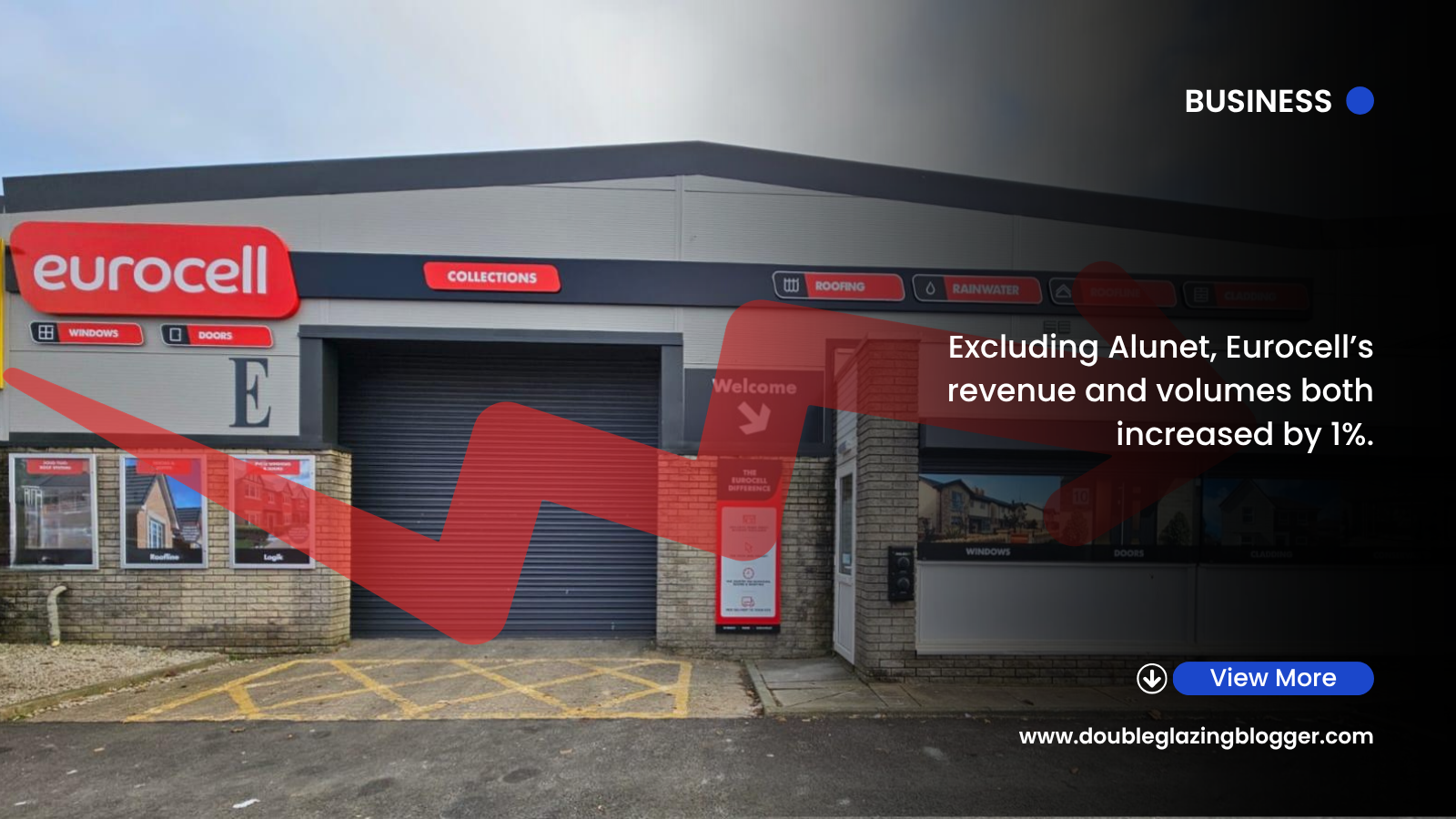
The distinction between reported and organic growth is central to understanding the results. Excluding Alunet, Eurocell’s revenue and volumes both increased by 1%. Organic revenue moved from a 2% decline in the first quarter to 4% growth in the second, indicating an improvement as the half progressed.
Alunet contributed £28.4m of revenue, compared with £17.7m in the previous reporting period. However, the 2025 comparator covers only the four months following its acquisition in March, whereas 2026 includes a full six months. Eurocell reports calendar-based first-half sales growth of 13%, a more meaningful indication of Alunet’s underlying progress than the increase in its consolidated contribution.
The same caution applies to profit. Alunet’s adjusted operating profit rose from £1.6m to £4.0m across those unequal periods. Its £2.4m increase exceeded the group’s £1.0m improvement, demonstrating how heavily the headline earnings growth depended on the acquired business. Eurocell report, pages 8–11
Within the established operations, Profiles provides the clearest evidence of pressure on fabricators and their end markets. Third-party revenue fell 5% to £69.6m, with volumes also down 5%. Adjusted operating profit declined 24% to £6.3m from £8.3m. Eurocell attributes the performance to increasingly difficult new-build housing conditions, reduced repair, maintenance and improvement activity through trade fabricators, and cost inflation.
The disproportionate fall in profit illustrates the sensitivity of manufacturing earnings to lower throughput. When sales volumes weaken, a business has less revenue over which to spread its operating costs, while wage and other inflation can compound the effect.
The Branch Network performed better. Third-party revenue increased 5% to £107.2m and adjusted operating profit rose from £0.9m to £1.5m. Window and door sales through the network increased 29% to £17.7m. Nevertheless, general RMI volumes in the branches fell 2%, showing that the division’s growth was achieved against continuing weakness in its underlying market. Eurocell report, pages 4 and 9–10
Independent industry data supports that distinction. The Builders Merchant Building Index reported that Q2 2026 sales values were 1.2% below the same quarter in 2025, with volumes down 6.6% and prices up 5.8%. Rising prices were therefore masking a much larger reduction in the quantity of products sold. BMBI Q2 2026 report
Against this background, Eurocell’s modest organic volume growth is encouraging. However, the BMBI covers generalist builders’ merchants and the second quarter, whereas Eurocell’s figure covers its organic business over six months. The comparison provides context, rather than a precise measure of market-share gains or outperformance.
The broader construction picture is also uneven. The ONS initially estimated that construction output grew 0.3% in Q2 compared with Q1, with infrastructure providing the largest positive contribution. Output nevertheless fell in each month of the quarter, while new orders declined 11.8% quarter on quarter. That orders decline was principally associated with private commercial and public other work, so it should not be treated as a direct measure of window and door demand. ONS June 2026 construction bulletin
More directly relevant to residential fenestration, the Construction Products Association’s summer forecast projected a 10% fall in private housing output and an 8% decline in private housing RMI during 2026. These are full-year forecasts, rather than measured first-half outcomes, but they underline the difficult demand outlook facing systems companies, fabricators and installers. CPA summer 2026 forecasts
Eurocell’s margins show the difficulty of recovering higher costs in that environment. Group gross margin fell from 51.0% to 50.0%. Excluding Alunet, it declined from 52.6% to 51.7%, confirming that acquisition-related changes in the business mix were not the only factor. The company implemented price increases and surcharges against higher input costs, but reported continued competitive pressure on branch selling prices.
Higher financing costs also absorbed part of the operating improvement. Adjusted finance costs increased from £2.3m to £2.9m, helping explain why adjusted pre-tax profit grew more slowly than adjusted operating profit. Eurocell report, pages 8–11
The statutory loss requires separate consideration. Net non-underlying charges totalled £9.6m, including £9.4m of restructuring costs, of which £6.7m comprised non-cash asset impairments. Adjusted results help assess trading before those items, but the impairments still recognise reduced asset values and the restructuring carries cash costs as well.
The operational response extends beyond the reporting period. Eurocell closed ten branches in July, including its two Irish sites, and temporarily paused new branch openings. Consolidating recycling operations at Ilkeston is expected to deliver approximately £1.5m of annual savings from 2027. A separate restructuring programme is expected to generate around £2m annually, with approximately £1m realised in H2 2026. These are anticipated benefits, not savings already fully reflected in the first-half result. Eurocell report, pages 5–6 and 9
Cash generation offers some reassurance, although operating cash flow should not be confused with cash remaining after all commitments. The £17.9m operating inflow precedes items including capital expenditure and lease payments. Pre-IFRS 16 net debt was slightly lower year on year, but increased from £22.1m at December 2025 to £28.1m at June 2026. Including lease liabilities, net debt was £93.7m. Eurocell report, page 12
Eurocell enters the second half with improving sales momentum, but a demanding task in converting that progress into stronger statutory earnings. Its results suggest that growth remains available through broader product ranges, distribution and customer acquisition. The weakness in Profiles and pressure on gross margins show that a sustained recovery in residential demand would still make a material difference to the quality and breadth of that growth.
Read the full Eurocell report here: https://investors.eurocell.co.uk/media/1580/2026-hyr-final.pdf

Subscribe for FREE below to receive the weekly DGBulletin newsletter and monthly digital magazine!